The convergence of Web3 and hyper-personalized digital twins promises a radical shift in individual agency and economic models, enabling decentralized self-sovereignty and unprecedented levels of personalized experience. This intersection leverages blockchain for verifiable data ownership and AI for creating dynamic, evolving digital representations of individuals, impacting everything from healthcare to education and beyond.
Symbiotic Convergence
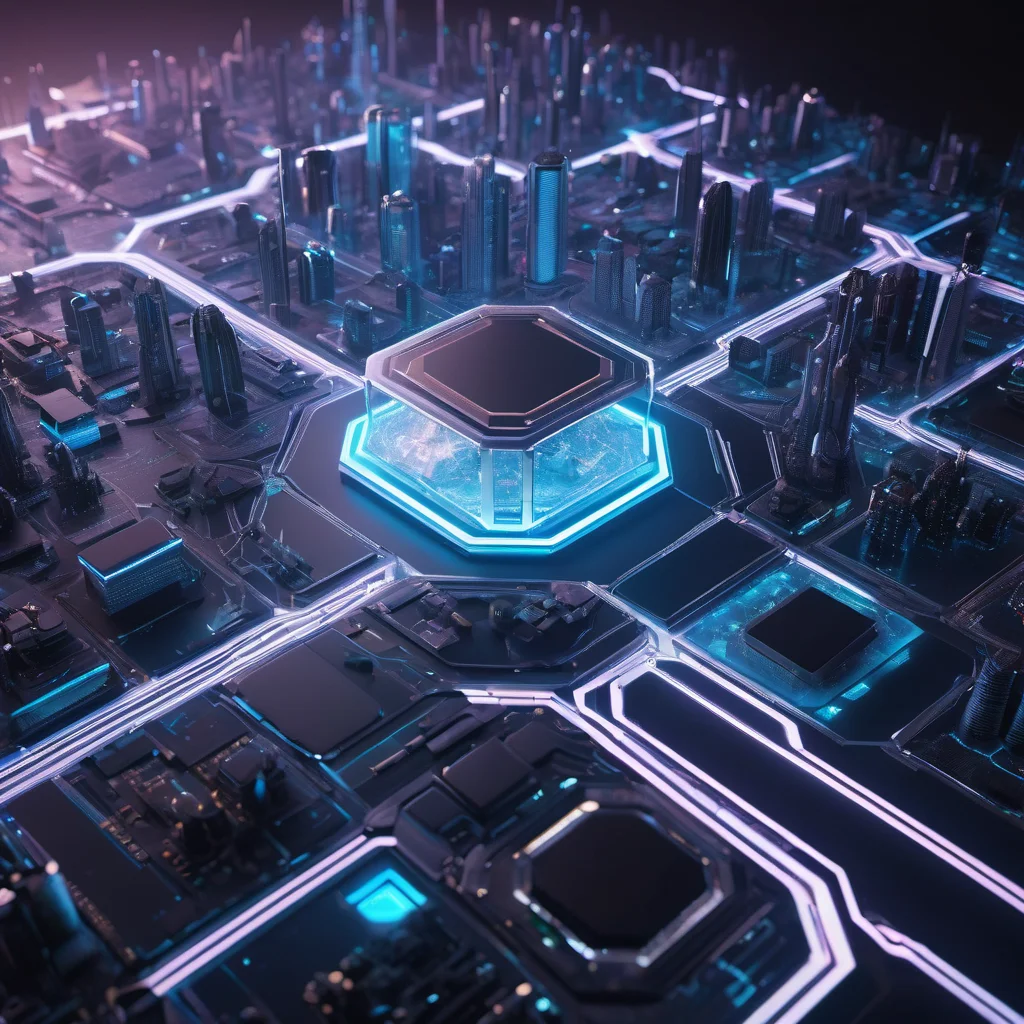
The Symbiotic Convergence: Web3, Hyper-Personalized Digital Twins, and the Dawn of Decentralized Self-Sovereignty
The rise of Web3, characterized by decentralization, blockchain technology, and tokenization, is occurring concurrently with the accelerating development of digital twins – virtual representations of physical entities or systems. While digital twins have traditionally focused on infrastructure and industrial applications, the potential for hyper-personalized digital twins, mirroring individual humans with unprecedented fidelity, is rapidly emerging. This article explores the intersection of these two transformative technologies, examining the underlying technical mechanisms, potential societal impacts, and a speculative future outlook, grounded in established scientific and economic frameworks.
The Current Landscape: Digital Twins and Web3 – Separate but Destined
Digital twins, initially conceived for optimizing industrial processes, utilize sensor data, simulation models, and machine learning to create dynamic replicas. The concept is rooted in cybernetics, specifically Wiener’s work on feedback loops and control systems. A digital twin of a wind turbine, for example, constantly receives data on wind speed, blade stress, and energy output, allowing for predictive maintenance and optimized performance. However, the data used to build these twins is often centralized and controlled by a single entity.
Web3, conversely, aims to redistribute control and ownership of data. Blockchain technology, particularly decentralized identifiers (DIDs) and verifiable credentials, provides a framework for individuals to own and manage their digital identities and data. The underlying cryptographic principles, such as zero-knowledge proofs, allow for verification of information without revealing the underlying data itself, a crucial element for privacy.
The Intersection: Hyper-Personalized Digital Twins in a Web3 Ecosystem
The true revolution lies in combining these two paradigms. Hyper-personalized digital twins, in this context, extend beyond simple biometric data. They incorporate physiological data (heart rate variability, sleep patterns, microbiome composition), behavioral data (online activity, purchasing habits, social interactions), environmental data (location, air quality), and even emotional data gleaned from facial expression analysis and sentiment analysis of communication. Crucially, ownership of this data resides with the individual.
This data is fed into sophisticated AI models – likely employing a hybrid architecture. A foundational Graph Neural Network (GNN) would represent the individual’s interconnected data points, allowing the AI to understand relationships and dependencies. Reinforcement learning would then be used to simulate potential future states based on various interventions (e.g., dietary changes, exercise regimens, educational programs). Generative Adversarial Networks (GANs) could be employed to create realistic simulations of the individual’s behavior and responses to different stimuli, further refining the twin’s predictive capabilities. The Web3 layer provides the infrastructure for secure data storage, verifiable credentials attesting to the accuracy of the data, and a marketplace for individuals to selectively share their twin’s insights for compensation.
Technical Mechanisms: A Deeper Dive
- Data Acquisition & Aggregation: Wearable sensors, implanted devices (in the future), and passively collected data from online interactions are aggregated. Privacy-preserving techniques like federated learning, where AI models are trained on decentralized data without direct access to the raw data, are essential.
- GNN Architecture: The GNN would represent the individual as a node in a graph, with edges connecting data points and representing relationships. Node embeddings would capture the individual’s state, and edge weights would reflect the strength of the relationships. This allows for reasoning about complex interactions.
- Reinforcement Learning for Simulation: The RL agent interacts with the GNN-powered digital twin, simulating interventions and observing the resulting changes in the individual’s state. This allows for personalized recommendations and predictive modeling of outcomes.
- Zero-Knowledge Proofs for Privacy: When sharing insights from the digital twin (e.g., participating in a research study), zero-knowledge proofs can be used to verify the accuracy of the data without revealing the underlying personal information. This is critical for maintaining individual privacy.
- Blockchain-Based Data Provenance: Each data point is timestamped and cryptographically linked to its source, creating an immutable audit trail. This ensures data integrity and accountability.
Societal and Economic Implications
The implications of this convergence are profound. Consider the potential for personalized healthcare: a digital twin could predict the onset of disease years in advance, allowing for proactive interventions. In education, the twin could tailor learning experiences to the individual’s cognitive style and pace. Economically, this creates new opportunities for individuals to monetize their data and expertise. However, it also raises significant ethical concerns, including data security, algorithmic bias, and the potential for discrimination.
This shift aligns with Schumpeterian creative destruction, where disruptive technologies fundamentally alter market structures and create new economic paradigms. The current centralized data economy is likely to be challenged by a decentralized model where individuals are empowered to control and benefit from their own data.
Future Outlook (2030s & 2040s)
- 2030s: Widespread adoption of personalized digital twins for healthcare and wellness. Early applications in education and personalized finance. The emergence of “digital twin marketplaces” where individuals can selectively share their data for compensation. Significant regulatory frameworks addressing data ownership and privacy.
- 2040s: Digital twins become integral to identity management and social interaction. Integration with augmented reality (AR) and virtual reality (VR) environments, creating immersive personalized experiences. The rise of “synthetic selfhood,” where individuals can explore different versions of themselves through their digital twins. The potential for digital twins to be used for legal representation and inheritance planning. Ethical debates intensify regarding the rights and responsibilities of digital twins and their creators.
Challenges and Considerations
Significant challenges remain. Computational power requirements are substantial. Data bias and algorithmic fairness are critical concerns. The psychological impact of constantly interacting with a digital representation of oneself needs careful consideration. The potential for misuse and malicious actors exploiting the system is a constant threat, requiring robust security measures and ethical guidelines.
Conclusion
The intersection of Web3 and hyper-personalized digital twins represents a paradigm shift with the potential to fundamentally reshape society and the individual experience. While significant technical and ethical challenges remain, the convergence promises a future where individuals are empowered to control their data, optimize their lives, and participate in a more equitable and decentralized digital economy. The journey requires careful navigation, guided by principles of privacy, fairness, and human agency, to ensure that this powerful technology serves humanity’s best interests.
This article was generated with the assistance of Google Gemini.