The convergence of synthetic biology and Artificial General Intelligence (AGI) presents a radical shift in AI development, potentially accelerating timelines and enabling novel computational architectures. This intersection promises to move beyond silicon-based AI, leveraging biological systems for processing, memory, and even self-improvement, with profound implications for the future.
Symbiotic Future
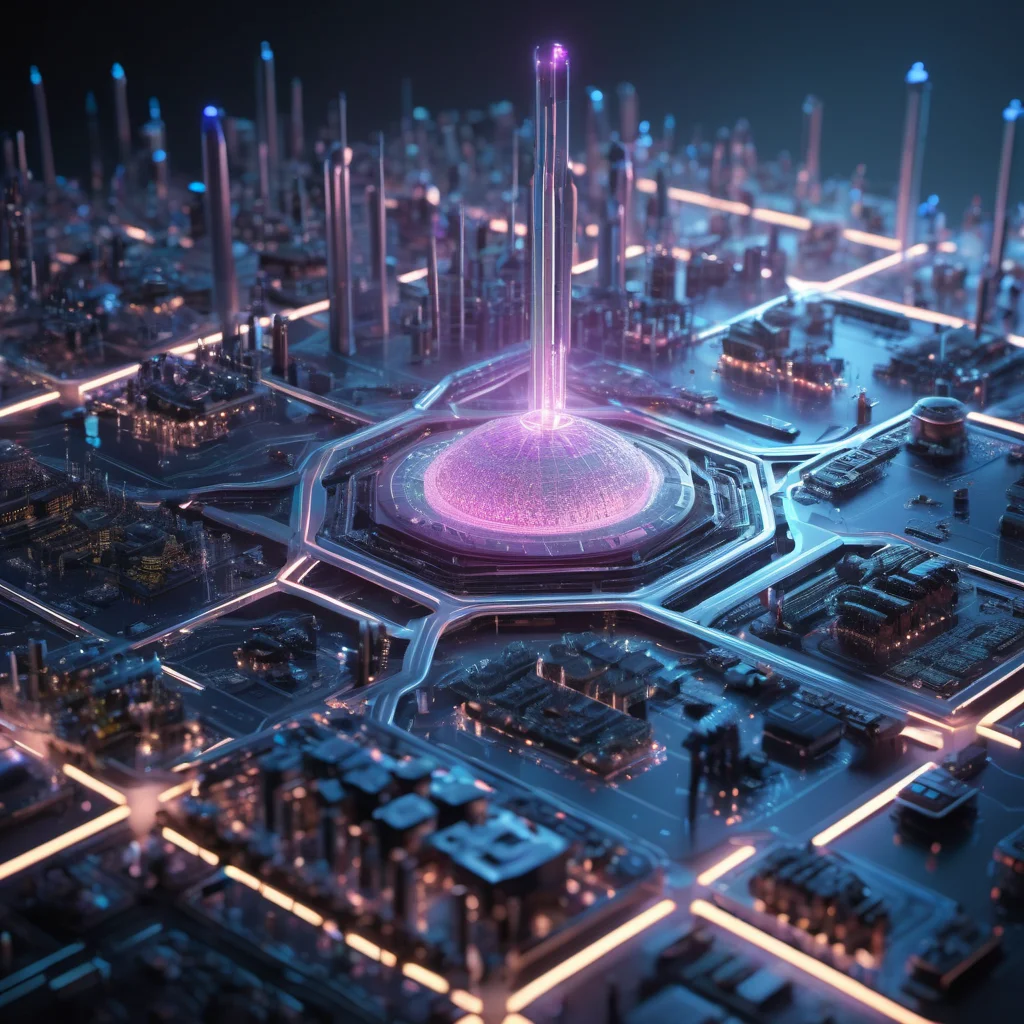
The Symbiotic Future: How Synthetic Biology Could Reshape AGI Timelines
The pursuit of Artificial General Intelligence (AGI) – AI with human-level cognitive abilities – has traditionally been tethered to advancements in silicon-based computing. However, a burgeoning field, synthetic biology, offers a compelling alternative and, increasingly, a synergistic pathway. This article explores the intersection of these two transformative technologies, examining the technical mechanisms at play, assessing the potential impact on AGI timelines, and speculating on the future landscape.
Understanding the Players: Synthetic Biology & AGI
- Synthetic Biology: At its core, synthetic biology applies engineering principles to biology. It involves designing and constructing new biological parts, devices, and systems, or redesigning existing natural biological systems for useful purposes. This goes beyond genetic engineering; it’s about creating entirely new biological functionalities. Current applications range from producing biofuels and pharmaceuticals to creating biosensors and novel materials.
- Artificial General Intelligence (AGI): Unlike narrow AI (e.g., image recognition, game playing), AGI aims to replicate the broad cognitive abilities of a human, including learning, reasoning, problem-solving, creativity, and adaptation. AGI remains a significant challenge, with current AI systems exhibiting only fragmented aspects of human intelligence.
Why Synthetic Biology Matters for AGI
The limitations of silicon-based computing are becoming increasingly apparent as we strive for AGI. Moore’s Law is slowing, power consumption is a major constraint, and the architecture of traditional computers struggles to efficiently handle the complexity of human-like cognition. Synthetic biology offers potential solutions across several critical areas:
- Novel Computational Architectures: Biological systems excel at parallel processing, adaptability, and energy efficiency – qualities that are fundamentally lacking in conventional computers. Synthetic biology allows us to design biological circuits that perform computations, mimicking the structure and function of neural networks but with potentially far greater efficiency.
- Biocomputing: This is the most direct application. Researchers are exploring using DNA, RNA, and proteins to perform computations. DNA, for example, can store vast amounts of information in a tiny space, far exceeding the density of current storage media. RNA can be designed to act as logic gates, performing calculations based on molecular interactions. Proteins can be engineered to act as molecular switches and sensors.
- Self-Replicating and Self-Improving AI: A key challenge for AGI is the ability to learn and improve autonomously. Biological systems are inherently self-replicating and capable of evolution. Synthetic biology could enable the creation of AI systems that can replicate themselves, modify their own code (genetic material), and evolve to become more intelligent – a prospect that is both exciting and raises significant ethical considerations.
- Neuromorphic Engineering: Inspired by the brain’s structure and function, neuromorphic computing aims to build hardware that mimics neural networks. Synthetic biology can contribute by providing the biological components – engineered neurons, synapses, and glial cells – to build truly biomimetic neuromorphic systems.
Technical Mechanisms: How it Works
Let’s delve into some specific technical mechanisms:
- DNA/RNA Computing: DNA strands can be designed to hybridize (bind) based on complementary sequences. This can be used to create logic gates where the output is determined by the presence or absence of specific DNA sequences. RNA can be used to create molecular switches that respond to specific stimuli.
- Protein-Based Computation: Engineered proteins can be designed to undergo conformational changes (shape changes) in response to specific inputs. These conformational changes can be used to trigger other reactions, effectively creating a computational process. Riboswitches, naturally occurring RNA elements that regulate gene expression, are a prime example and are being adapted for computational purposes.
- Cellular Automata: Biological cells can be programmed to act as individual “cells” in a cellular automaton, a computational model where cells update their states based on the states of their neighbors. This allows for complex patterns and computations to emerge from simple rules.
- Neural Network Emulation with Biological Circuits: Researchers are designing synthetic gene circuits that mimic the behavior of artificial neural networks. These circuits use engineered promoters (DNA sequences that control gene expression) to create “neurons” that fire based on the input they receive. Synapses are simulated by regulating the strength of these promoters.
Impact on AGI Timelines
The integration of synthetic biology into AGI development has the potential to significantly accelerate timelines, although predicting the exact impact is difficult. Here’s a tiered assessment:
- Near-Term (5-10 years): We can expect to see significant advancements in biocomputing, particularly in specialized applications like biosensing and drug discovery. Neuromorphic engineering will benefit from synthetic biology’s ability to create more realistic biological components. This will likely slightly accelerate progress towards AGI by providing more efficient hardware for existing AI algorithms.
- Mid-Term (10-20 years): The development of self-replicating and self-improving AI systems becomes a realistic possibility. This could lead to an exponential increase in AI capabilities, potentially pushing AGI timelines forward considerably. However, significant challenges remain in controlling and ensuring the safety of such systems.
- Long-Term (20+ years): The potential for truly symbiotic AI – where biological and silicon-based systems are seamlessly integrated – emerges. This could lead to AI systems with capabilities far exceeding anything we can currently imagine.
Future Outlook (2030s & 2040s)
- 2030s: Expect to see “bio-hybrid” AI systems – combinations of silicon and biological components – becoming increasingly common. These systems will likely be used in specialized applications requiring high energy efficiency or adaptability. The first demonstrations of rudimentary self-replicating AI systems, albeit tightly controlled, are likely.
- 2040s: The lines between biology and computation will continue to blur. We may see the emergence of entirely new computational paradigms based on engineered biological systems. The ethical and societal implications of self-improving AI will demand careful consideration and robust regulatory frameworks.
Challenges and Considerations
Despite the immense potential, significant challenges remain: the complexity of biological systems, the difficulty of designing and controlling genetic circuits, the ethical concerns surrounding self-replicating AI, and the potential for unintended consequences are all critical hurdles that must be addressed. Robust safety protocols and ethical guidelines are paramount as this technology matures.
Conclusion
The intersection of synthetic biology and AGI represents a paradigm shift in AI development. While the path forward is fraught with challenges, the potential rewards – more efficient, adaptable, and even self-improving AI – are too significant to ignore. This symbiotic future promises to reshape our world in profound ways, demanding careful consideration and responsible innovation.
This article was generated with the assistance of Google Gemini.