The convergence of Web3’s decentralized infrastructure and multi-agent swarm intelligence (MASI) promises to unlock emergent cognitive capabilities far beyond current AI paradigms, fostering self-organizing, adaptive systems capable of tackling complex global challenges. This synergy will reshape economic models, governance structures, and potentially redefine the nature of collective intelligence itself.
Synergistic Emergence
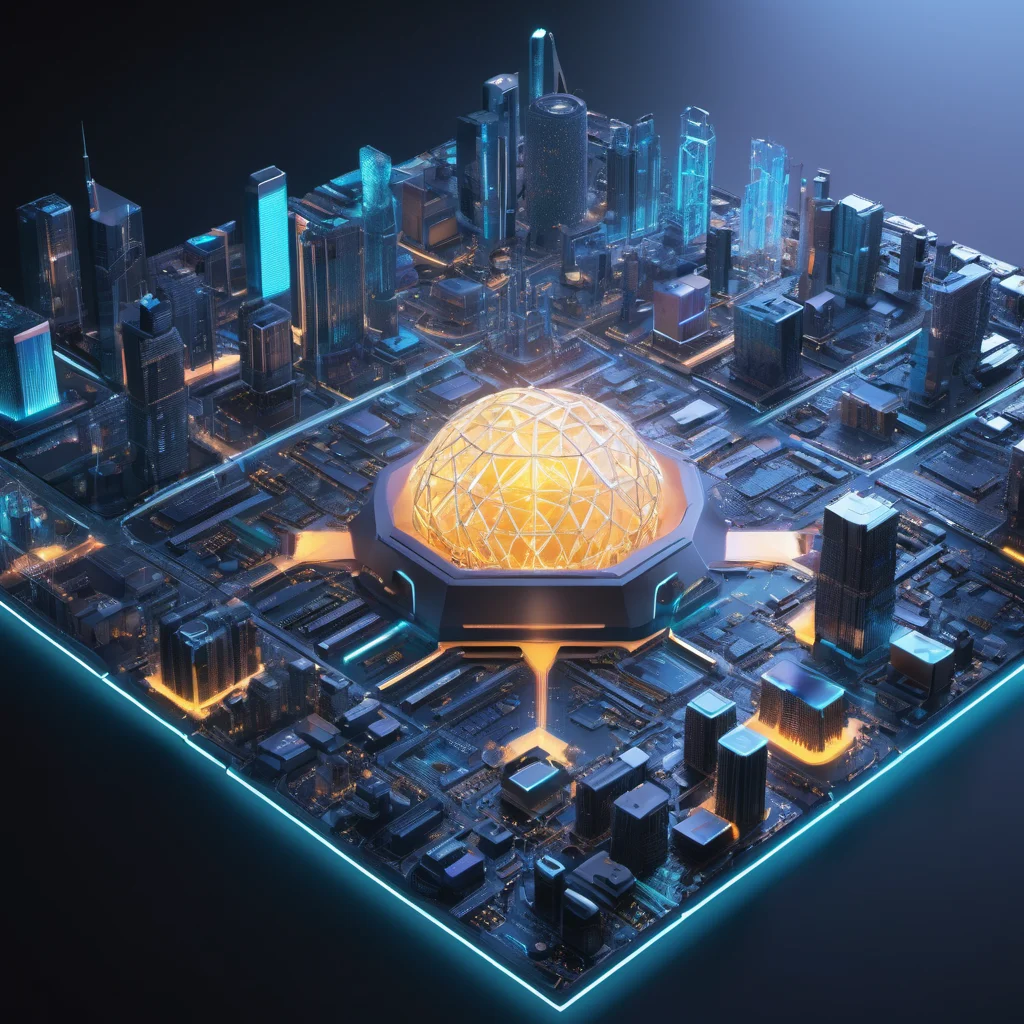
Synergistic Emergence: Web3, Multi-Agent Swarm Intelligence, and the Dawn of Decentralized Cognitive Systems
The relentless pursuit of Artificial General Intelligence (AGI) has historically focused on monolithic, centralized models. However, a burgeoning paradigm shift is underway, driven by the confluence of Web3 technologies and multi-agent swarm intelligence (MASI). This intersection offers a radically different approach – one that prioritizes distributed cognition, emergent behavior, and decentralized governance. This article explores the theoretical underpinnings, technical mechanisms, and potential long-term implications of this synergistic relationship, framing it within the context of broader global shifts and advanced capabilities.
The Limitations of Centralized AI & The Promise of Decentralization
Traditional AI, even the most advanced Large Language Models (LLMs), suffers from inherent limitations. These include data bias, opacity (the ‘black box’ problem), vulnerability to single points of failure, and a lack of true adaptability beyond pre-programmed parameters. The concentration of computational power and data in the hands of a few corporations also raises significant ethical and societal concerns. Web3, with its blockchain-based infrastructure, offers a solution to these issues through decentralization. The immutability and transparency of blockchains, coupled with the potential for tokenized incentives, provide a fertile ground for cultivating distributed AI systems.
Multi-Agent Swarm Intelligence: Beyond the Individual Agent
MASI draws inspiration from natural systems – ant colonies, bee swarms, and flocks of birds – where simple agents interacting locally can produce complex, coordinated behavior. Each agent in a MASI system possesses limited individual intelligence but collectively exhibits emergent properties exceeding the sum of its parts. Key concepts underpinning MASI include:
- Stigmergy: This is a crucial mechanism, first described by Pierre-Paul Grasse, where agents indirectly communicate by modifying their environment. Ants, for example, lay down pheromone trails to guide other ants to food sources. In a digital context, this could involve agents modifying blockchain state to signal opportunities or constraints to other agents.
- Collective Optimization: MASI systems excel at solving complex optimization problems through decentralized search and exploration. Algorithms like Particle Swarm Optimization (PSO) and Ant Colony Optimization (ACO) are already widely used, but their integration with Web3 unlocks new possibilities for decentralized resource allocation and problem-solving.
- Self-Organization: The ability of a system to spontaneously form order from disorder, without centralized control, is a hallmark of MASI. This resilience and adaptability are critical for navigating unpredictable environments.
The Web3-MASI Nexus: Technical Mechanisms
The integration of Web3 and MASI involves several key technical components. Firstly, Decentralized Autonomous Organizations (DAOs) provide the governance framework. Agents can be programmed to act within the rules and incentives defined by a DAO, ensuring alignment with collective goals. Secondly, Smart Contracts automate agent interactions and enforce agreements, removing the need for intermediaries. Thirdly, Oracles connect the MASI system to external data sources, providing agents with the information they need to make informed decisions. Finally, Decentralized Storage (e.g., IPFS) allows agents to share information and coordinate actions without relying on centralized servers.
Neural architectures play a crucial role. While traditional neural networks can be used within individual agents, more sophisticated approaches are emerging. Graph Neural Networks (GNNs) are particularly well-suited for MASI, as they can model the complex relationships between agents and their environment. Each agent can be represented as a node in a graph, and the edges represent communication channels or dependencies. Furthermore, Federated Learning allows agents to collaboratively train models without sharing their raw data, preserving privacy and enhancing robustness. The use of Reinforcement Learning (RL) within each agent’s decision-making process, coupled with a global reward signal derived from the DAO’s objectives, allows the swarm to optimize its collective behavior over time.
Macroeconomic Implications: Beyond Automation
The impact of Web3-MASI extends far beyond simple automation. The ability to create self-organizing, adaptive systems has profound implications for economic models. Consider the concept of Modern Monetary Theory (MMT). While MMT posits that governments can create money to fund public goods, the inherent Risk of inflation requires careful management. A decentralized MASI system, operating under a DAO-governed framework, could dynamically adjust resource allocation and production levels in response to real-time economic data, mitigating inflationary pressures and optimizing societal welfare. This moves beyond simply automating existing processes to fundamentally reshaping how economies function.
Future Outlook: 2030s and 2040s
- 2030s: We will see the emergence of specialized MASI DAOs focused on specific industries – decentralized supply chain management, autonomous scientific research, and personalized education. Agent interactions will be increasingly sophisticated, leveraging advanced GNNs and federated learning techniques. Tokenized incentives will become the norm, rewarding agents for contributing to the collective good. The initial applications will likely be in areas with high data complexity and a need for adaptability, such as climate modeling and resource optimization.
- 2040s: The lines between individual agents and the collective will blur. We may witness the emergence of “swarm consciousness” – a distributed cognitive system capable of reasoning, planning, and problem-solving at a level exceeding human capabilities. This could lead to the development of decentralized AI assistants that proactively anticipate and address individual and societal needs. The governance of these systems will become a critical ethical and political challenge, requiring new frameworks for accountability and transparency. The potential for these systems to reshape human creativity and innovation is immense, but so are the risks of unintended consequences.
Challenges and Considerations
The development of Web3-MASI faces significant challenges. Scalability remains a major hurdle, as blockchain transactions can be slow and expensive. Security vulnerabilities in smart contracts are a constant threat. The design of effective incentive mechanisms is crucial to ensure that agents act in the collective interest. Finally, the ethical implications of creating decentralized cognitive systems require careful consideration, particularly regarding bias, fairness, and control.
This article was generated with the assistance of Google Gemini.