Automated substrate optimization, driven by AI, is rapidly emerging as a critical technology for vertical farming and controlled environment agriculture, attracting significant venture capital. This trend is fueled by global food security concerns, resource scarcity, and advancements in machine learning capable of modeling complex biological systems.
Venture Capital Trends Influencing Automated Substrate Optimization in Agricultural Tech
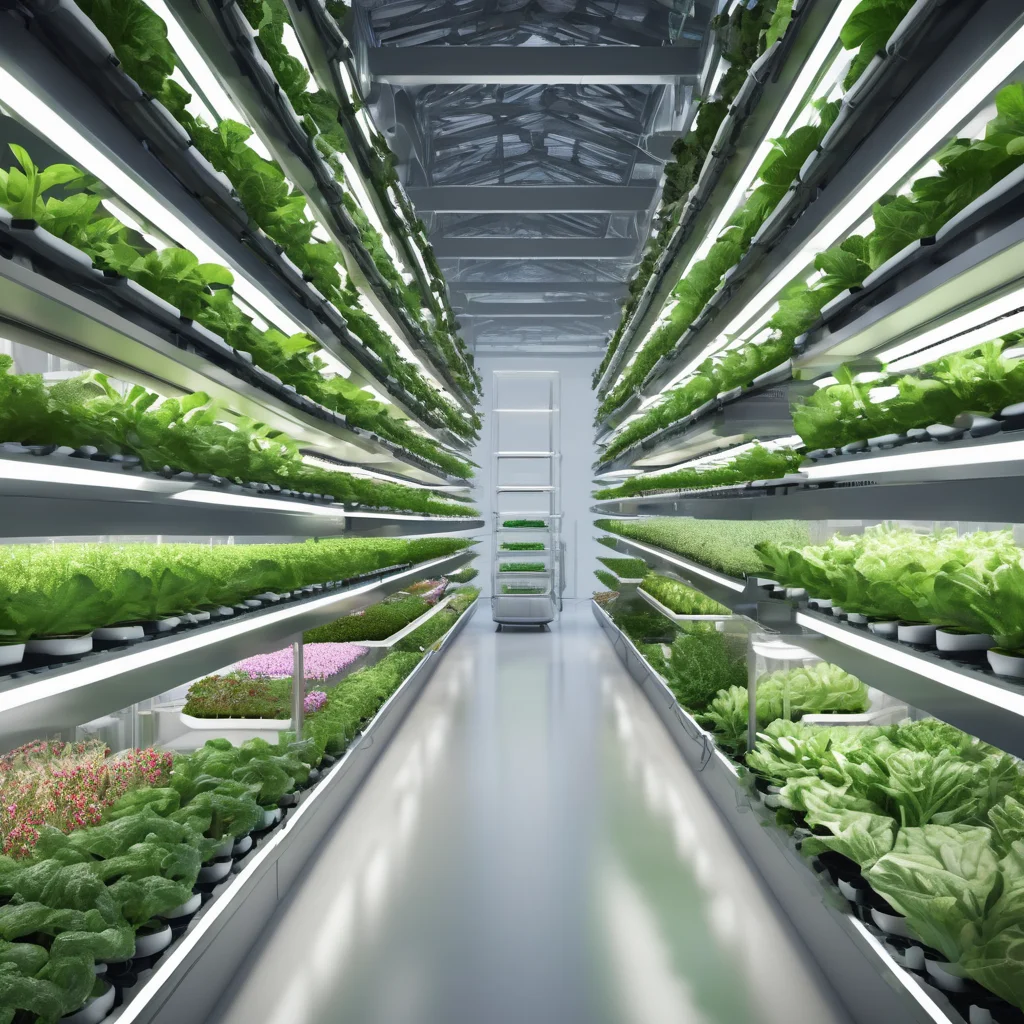
Venture Capital Trends Influencing Automated Substrate Optimization in Agricultural Tech
The convergence of artificial intelligence (AI), advanced materials science, and the escalating pressures of global food insecurity is catalyzing a surge in venture capital investment focused on automated substrate optimization within agricultural technology. This isn’t merely about tweaking nutrient solutions; it represents a paradigm shift towards data-driven, predictive agriculture capable of maximizing yields while minimizing resource consumption. This article will explore the current VC landscape, the underlying technical mechanisms driving this innovation, and speculate on its future trajectory, grounded in scientific principles and macro-economic considerations.
The Global Context: A Perfect Storm
Several interconnected global trends are driving the demand for and investment in automated substrate optimization. Firstly, the projected global population reaching nearly 10 billion by 2050 necessitates a significant increase in food production. Traditional agricultural practices are increasingly unsustainable, facing challenges from climate change, water scarcity, and soil degradation. Secondly, the concept of planetary boundaries, as articulated by Johan Rockström and colleagues (Rockström et al., 2009), highlights the finite nature of Earth’s resources and the urgent need to operate within safe ecological limits. Agriculture, a major contributor to environmental degradation, must become more efficient and resource-conscious. Finally, the rising cost of energy and raw materials, exacerbated by geopolitical instability, further incentivizes the adoption of technologies that minimize waste and maximize productivity. Vertical farming and controlled environment agriculture (CEA) offer a potential solution, but their economic viability hinges on optimizing every aspect of the growing process, with substrate optimization being paramount.
Venture Capital Landscape & Investment Vectors
The VC landscape surrounding automated substrate optimization is currently in a phase of rapid expansion. Early-stage funding is flowing into companies developing AI-powered platforms that analyze plant physiology, environmental conditions, and substrate composition in real-time. We are seeing investment across three primary vectors:
- Precision Nutrient Delivery: Companies like AppHarvest and Plenty are attracting significant funding for systems that dynamically adjust nutrient solutions based on plant needs, reducing fertilizer waste and improving crop quality. These systems often integrate with environmental controls (light, temperature, humidity) for holistic optimization.
- Substrate Material Innovation: Investment is also directed towards companies developing novel substrate materials – beyond traditional coco coir and rockwool – that offer improved aeration, water retention, and nutrient delivery capabilities. This includes research into biochar, aeroponics, and even mycelium-based substrates.
- AI-Driven Modeling & Control: This is the core enabling technology. Companies like Pivot Bio (though focused on microbial solutions, the underlying AI principles are transferable) and others are developing machine learning models to predict plant responses to substrate changes and optimize growing conditions. This often involves the use of Gaussian Process Regression (GPR) for its ability to model complex, non-linear relationships between input variables (substrate composition, environmental factors) and output variables (plant growth, yield). GPR provides Uncertainty quantification, a crucial feature for Risk-averse investors.
Technical Mechanisms: The AI Engine
The AI underpinning automated substrate optimization typically utilizes a combination of techniques. A common architecture involves a multi-layered approach:
- Sensor Data Acquisition: A network of sensors continuously monitors substrate properties (pH, EC, oxygen levels, moisture content), plant physiology (chlorophyll content, stem diameter, leaf area index), and environmental conditions (temperature, humidity, light intensity). Advances in micro-electro-mechanical systems (MEMS) are enabling the development of increasingly miniaturized and low-cost sensors.
- Data Preprocessing & Feature Engineering: Raw sensor data is cleaned, normalized, and transformed into meaningful features. This often involves techniques like Principal Component Analysis (PCA) to reduce dimensionality and identify the most relevant variables.
- Machine Learning Model Training: A machine learning model is trained on historical data to predict plant response to different substrate conditions. Recurrent Neural Networks (RNNs), particularly Long Short-Term Memory (LSTM) networks, are increasingly favored due to their ability to handle sequential data and model temporal dependencies in plant growth. Reinforcement learning is also being explored, allowing the AI to learn optimal substrate adjustments through trial and error.
- Real-Time Control & Optimization: The trained model is deployed to a control system that dynamically adjusts the substrate composition, nutrient delivery, and environmental conditions in real-time, based on the predicted plant response. This creates a closed-loop feedback system.
Scientific Concepts at Play
- Homeostasis: Plant growth is fundamentally a process of maintaining homeostasis – a stable internal environment. Automated substrate optimization aims to proactively support this process by providing the optimal external conditions.
- Allometry: The study of proportional relationships in organisms. AI models can leverage allometric principles to predict how changes in one substrate parameter will affect other aspects of plant growth and development.
- Metabolic Modeling: While still in its nascent stages for widespread application, integrating metabolic modeling into the AI framework promises to provide a deeper understanding of plant physiology and allow for even more precise substrate optimization. This would involve incorporating data on metabolic pathways and enzyme kinetics into the predictive models.
Future Outlook (2030s & 2040s)
- 2030s: We can expect to see widespread adoption of automated substrate optimization in commercial vertical farms and CEA facilities. AI models will become increasingly sophisticated, incorporating genomic data and predictive models of plant stress responses. The rise of digital twins – virtual representations of entire growing environments – will allow for experimentation and optimization without disrupting actual production.
- 2040s: Substrate optimization will likely move beyond individual farms to encompass regional or even global food production networks. AI-powered platforms will analyze data from diverse growing environments to identify optimal substrate formulations for different crop varieties and climates. The integration of quantum computing could unlock the ability to model incredibly complex biological systems, leading to breakthroughs in substrate design and plant physiology. Furthermore, personalized nutrition profiles for crops, tailored to consumer needs, could become a reality, driven by AI-optimized substrate formulations.
Conclusion
The intersection of AI, materials science, and agricultural necessity is creating a fertile ground for innovation in automated substrate optimization. Venture capital investment is flowing into this space, driven by the potential to revolutionize food production and address the challenges of a rapidly changing world. While significant technical hurdles remain, the long-term trajectory points towards a future where AI-powered substrate optimization plays a critical role in ensuring global food security and environmental sustainability.
This article was generated with the assistance of Google Gemini.