Brain-Computer Interfaces (BCIs) and neural decoding technologies are rapidly advancing, blurring the lines between mind, machine, and self, posing profound philosophical challenges regarding identity, agency, and the very definition of consciousness. The long-term societal and existential ramifications demand careful ethical and philosophical consideration alongside technological development.
Philosophical Implications of Brain-Computer Interfaces (BCI) and Neural Decoding
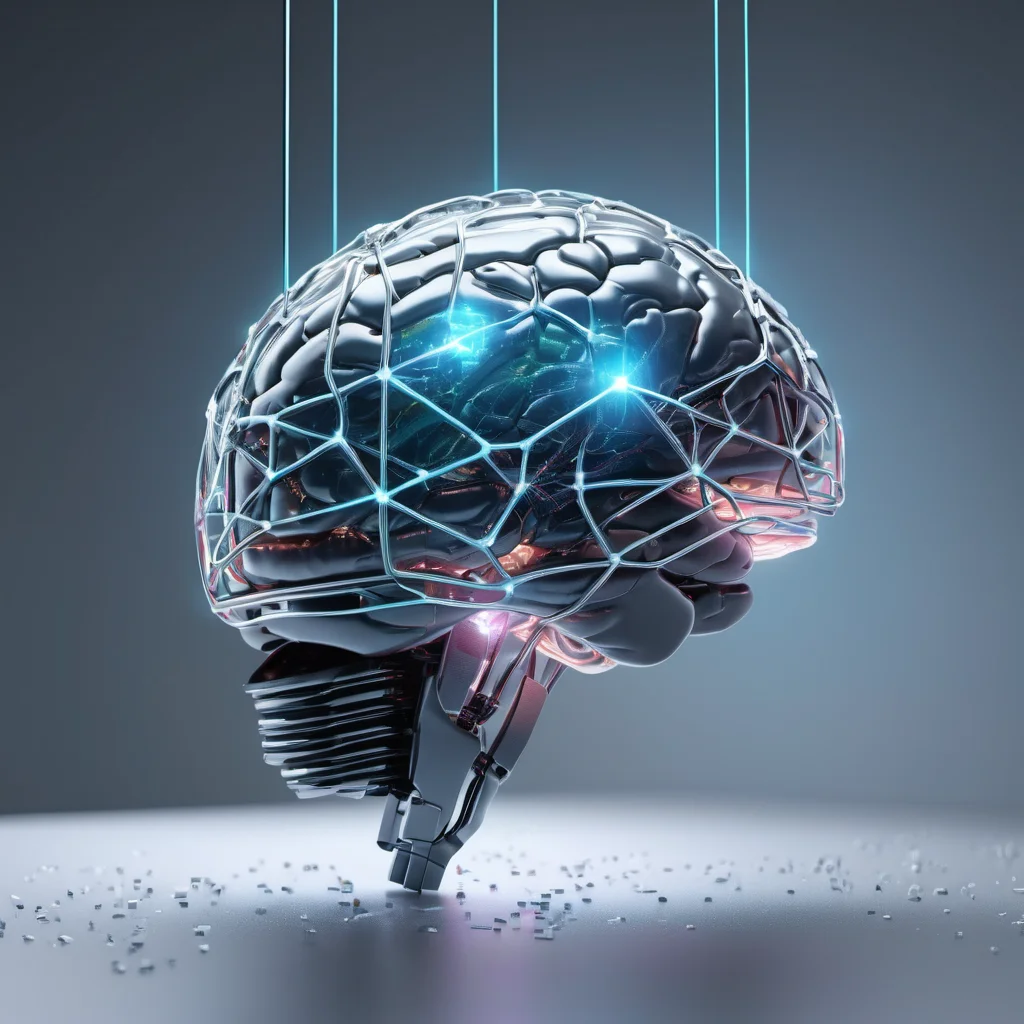
The Philosophical Implications of Brain-Computer Interfaces (BCI) and Neural Decoding
Introduction:
The convergence of neuroscience, artificial intelligence, and engineering is giving rise to Brain-Computer Interfaces (BCIs) and advanced neural decoding capabilities. While initially envisioned for therapeutic applications – restoring motor function to paralyzed individuals, for example – the trajectory of this technology points towards increasingly sophisticated interactions between the human brain and external systems. This article explores the profound philosophical implications of this burgeoning field, moving beyond the immediate medical benefits to consider long-term global shifts and the potential reshaping of human existence. We will examine the technical underpinnings, the ethical quandaries, and speculate on the future landscape shaped by these transformative technologies.
Technical Mechanisms: From Signals to Meaning
At its core, a BCI establishes a communication pathway between the brain and an external device. The fundamental principle relies on detecting and interpreting neural activity. This can be achieved through invasive methods (implanted electrodes, offering higher resolution but posing surgical risks) or non-invasive methods (electroencephalography - EEG, magnetoencephalography - MEG, functional near-infrared spectroscopy - fNIRS, which are safer but offer lower signal quality).
-
Neural Correlates of Consciousness (NCC): A critical concept underpinning neural decoding is the identification of NCCs. These are the minimal neuronal mechanisms jointly sufficient for any one specific conscious percept. Research into NCCs, particularly using techniques like multivariate pattern analysis (MVPA) applied to fMRI data, aims to identify patterns of brain activity associated with specific thoughts, emotions, and intentions. For example, researchers at Carnegie Mellon University have demonstrated the ability to decode intended actions from brain activity with increasing accuracy, using machine learning algorithms to map neural patterns to specific movements (Churchland et al., 2011). This work highlights the potential to ‘read’ intentions directly from the brain.
-
Spiking Neural Networks (SNNs): Traditional artificial neural networks (ANNs) are computationally efficient but lack biological realism. SNNs, which more closely mimic the spiking behavior of biological neurons, are gaining traction in BCI research. They offer the potential for more energy-efficient and nuanced decoding of neural signals, particularly crucial for implanted devices requiring long-term power management. The ability to model and interpret these complex spiking patterns is vital for translating brain activity into actionable commands.
-
Closed-Loop Systems & Adaptive Decoding: Early BCI systems were primarily ‘open-loop’ – the brain sends signals, the device acts. The future lies in ‘closed-loop’ systems, where the device provides feedback to the brain, allowing for adaptive learning and refinement of the interface. This requires sophisticated algorithms capable of real-time signal processing, decoding, and feedback modulation, creating a symbiotic relationship between the brain and the machine. This feedback loop introduces a new layer of complexity regarding agency and control (see below).
Philosophical Quandaries: Identity, Agency, and the Self
The prospect of directly interfacing with the brain raises profound philosophical questions. The most immediate concerns revolve around the nature of identity and agency.
-
The Extended Self: If a BCI allows us to augment our cognitive abilities, access information directly, or even experience the world through another’s senses, does this expand our sense of self? The concept of the ‘extended mind’ – the idea that cognitive processes can be distributed across the brain and external tools – becomes increasingly relevant. If a BCI becomes integral to our thinking and decision-making, where does the ‘self’ reside? Does it encompass the BCI itself?
-
Agency and Moral Responsibility: BCIs raise complex questions about agency and moral responsibility. If a BCI influences our thoughts or actions, who is responsible for those actions? The user? The BCI designer? The AI algorithms driving the interface? The legal and ethical frameworks surrounding BCI use will need to grapple with these issues, particularly as BCIs become more sophisticated and capable of subtle manipulation.
-
The Problem of Consciousness & Uploading: The ultimate, and most speculative, philosophical challenge arises from the possibility of ‘mind uploading’ – transferring a person’s consciousness to a digital substrate. While currently science fiction, advancements in neural decoding and computational power could, in principle, make this a possibility. This raises fundamental questions about the nature of consciousness, whether it can be replicated or transferred, and what it means to be human.
Macro-Economic and Societal Shifts: A New Era of Cognitive Enhancement?
The widespread adoption of BCIs will likely trigger significant macro-economic and societal shifts. The concept of ‘cognitive enhancement’ – using technology to improve cognitive abilities – will become increasingly prevalent, potentially exacerbating existing inequalities.
-
The ‘Cognitive Divide’: Access to advanced BCI technology will likely be unevenly distributed, creating a ‘cognitive divide’ between those who can afford cognitive enhancement and those who cannot. This could lead to a widening gap in educational attainment, economic productivity, and social mobility, potentially destabilizing societies. This echoes the concerns raised by theories of technological determinism, where technological advancements disproportionately benefit certain groups, reinforcing existing power structures.
-
The Future of Work: BCIs could revolutionize the workplace, enabling workers to perform tasks with greater efficiency and precision. However, this could also lead to job displacement and the need for widespread retraining programs. The concept of ‘human capital’ will be redefined as cognitive abilities become increasingly augmented by technology.
Future Outlook (2030s & 2040s):
- 2030s: Non-invasive BCIs for cognitive enhancement (attention, memory) will become increasingly common, though likely expensive. Closed-loop BCI systems for therapeutic applications (stroke rehabilitation, paralysis) will be widely adopted. Early demonstrations of rudimentary thought-to-text communication will emerge, but accuracy and speed will remain limitations.
- 2040s: Significant advancements in SNNs and neural decoding algorithms will lead to more sophisticated and nuanced BCIs. The ‘cognitive divide’ will become a major societal concern, prompting debates about equitable access to cognitive enhancement technologies. The first, tentative steps towards bidirectional brain-to-brain communication (allowing for limited information transfer between individuals) may be explored, raising profound ethical questions.
Conclusion:
Brain-Computer Interfaces and Neural Decoding technologies represent a paradigm shift in our understanding of the brain and its relationship to the world. While the potential benefits are immense – from restoring lost function to augmenting human capabilities – the philosophical and ethical implications are equally profound. A proactive and interdisciplinary approach, involving neuroscientists, ethicists, philosophers, policymakers, and the public, is crucial to navigate the challenges and ensure that these powerful technologies are developed and deployed responsibly, safeguarding human dignity and fostering a future where technology serves humanity’s best interests.
This article was generated with the assistance of Google Gemini.