Brain-Computer Interfaces (BCIs) and advanced neural decoding are poised to fundamentally alter human capabilities, blurring the lines between biological and artificial intelligence. This technological convergence promises unprecedented control, cognitive enhancement, and therapeutic applications, with profound implications for global economics and societal structures.
Redefining Human Capability Through Brain-Computer Interfaces (BCI) and Neural Decoding
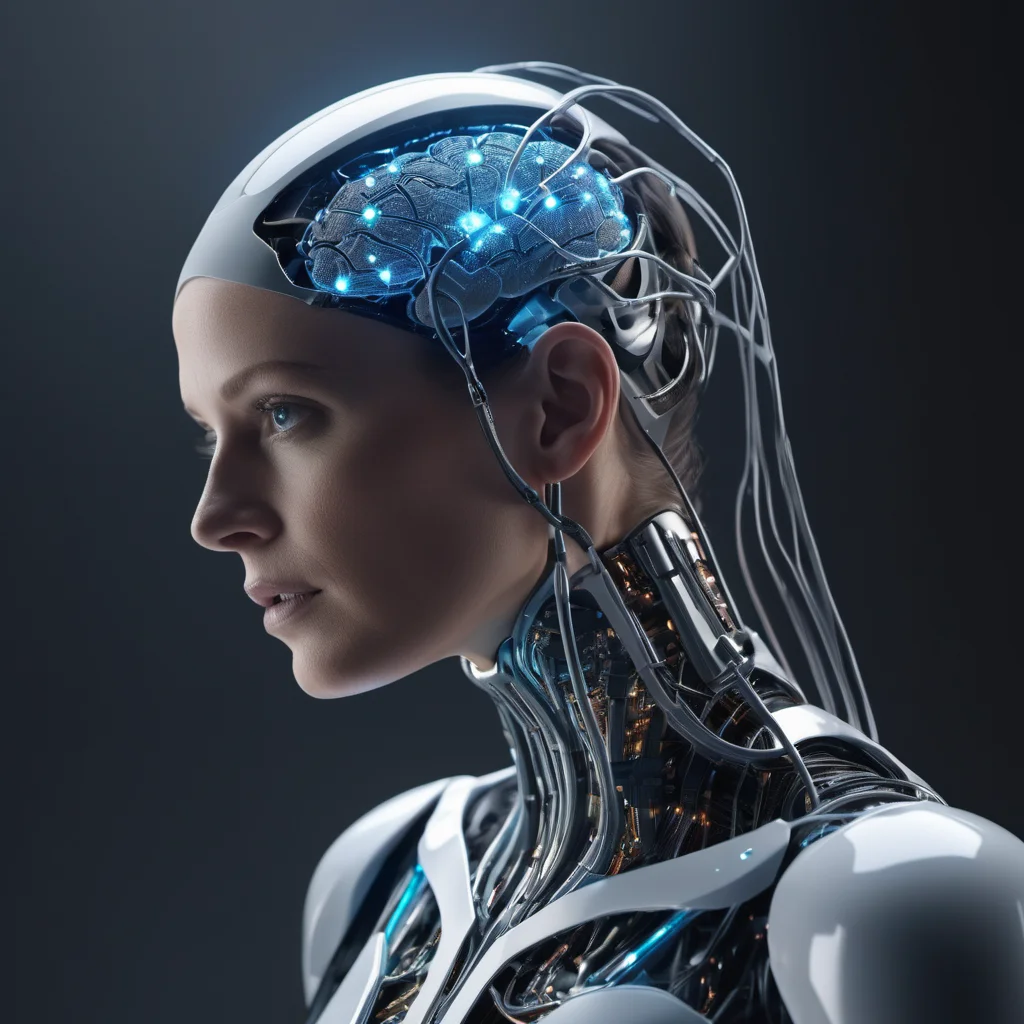
Redefining Human Capability Through Brain-Computer Interfaces (BCI) and Neural Decoding
For millennia, human potential has been constrained by the limitations of our biology. While technological advancements have consistently expanded our physical and cognitive reach, the inherent boundaries of the brain have remained largely impenetrable. This is rapidly changing. Brain-Computer Interfaces (BCIs), coupled with sophisticated neural decoding algorithms, are emerging as transformative technologies capable of redefining human capability, offering the potential to augment cognition, restore lost function, and even facilitate entirely new forms of interaction with the world. This article explores the technical mechanisms underpinning this revolution, examines current research vectors, and speculates on the long-term global shifts these technologies will engender.
The Foundations: Neuroscience and Signal Processing
At the heart of BCI technology lies a deep understanding of neuroscience. The brain operates through complex patterns of electrical activity, primarily generated by the coordinated firing of neurons. Spiking Neural Networks (SNNs), a biologically inspired computational model, are increasingly vital. Unlike traditional Artificial Neural Networks (ANNs) that rely on continuous values, SNNs mimic the discrete, event-driven nature of neuronal communication, allowing for more efficient and potentially more accurate decoding of brain signals. Decoding these signals is a monumental challenge. Electroencephalography (EEG), electrocorticography (ECoG), and invasive microelectrode arrays (MEAs) are the primary methods for recording brain activity. EEG, non-invasive but with low spatial resolution, is suitable for basic BCI applications. ECoG, requiring surgical implantation, offers significantly improved signal quality. MEAs, the most invasive, provide the highest resolution but present significant ethical and practical hurdles. The raw data from these recordings is then processed using sophisticated signal processing techniques, including filtering, artifact removal, and feature extraction. Common Spatial Patterns (CSP), for instance, is a widely used technique for identifying and separating patterns of brain activity associated with different cognitive states, crucial for motor imagery-based BCIs.
Current Research Vectors & Applications
Research in BCI is progressing on multiple fronts. Restorative BCIs are focused on assisting individuals with paralysis or neurological disorders. Companies like Neuralink are pursuing high-bandwidth, minimally invasive implants aimed at restoring motor function and treating conditions like Parkinson’s disease. Neuroprosthetics, controlled by brain signals, are already enabling paralyzed individuals to operate robotic limbs and control computer cursors. Beyond restoration, augmentation BCIs seek to enhance cognitive abilities in healthy individuals. This includes applications in areas like memory enhancement, attention regulation, and skill acquisition. The development of closed-loop BCIs, which provide real-time feedback to the brain based on decoded activity, is a key area of focus. For example, researchers are exploring closed-loop systems to improve motor learning or to treat depression by modulating brain activity patterns. Predictive Coding, a theoretical framework in neuroscience, is informing the design of these closed-loop systems. Predictive coding posits that the brain constantly generates predictions about the world and updates these predictions based on sensory input. BCIs leveraging predictive coding principles can potentially provide more targeted and effective interventions by anticipating and correcting deviations from desired brain states.
Technical Mechanisms: Decoding and Neural Interfaces
Neural decoding involves translating brain activity patterns into meaningful information. This often relies on machine learning algorithms, particularly supervised learning, where algorithms are trained on labeled data (e.g., brain activity associated with specific movements). The complexity of decoding algorithms is directly related to the complexity of the task and the quality of the neural signal. Deep learning techniques, particularly convolutional neural networks (CNNs), are increasingly being employed to extract complex features from brain activity data. The interface itself – the BCI – is crucial. Invasive BCIs offer superior signal quality but pose risks associated with surgery and long-term biocompatibility. Non-invasive BCIs are safer but limited by signal attenuation and noise. Significant advances are being made in materials science to develop more biocompatible and flexible electrode materials, and in signal processing techniques to mitigate noise and improve signal resolution. The development of ‘neuropatches’ – flexible, dry electrode arrays – represents a promising avenue for improving the practicality of non-invasive BCIs.
Future Outlook: 2030s and 2040s
By the 2030s, we can expect to see more widespread adoption of restorative BCIs for individuals with paralysis and neurological disorders. High-bandwidth, minimally invasive implants will become increasingly common, offering improved functionality and reduced recovery times. The integration of BCIs with virtual and augmented reality environments will create immersive experiences for rehabilitation and entertainment. In the 2040s, augmentation BCIs may become more prevalent, although ethical considerations and regulatory hurdles will likely limit their widespread adoption. We might see specialized BCIs for enhancing cognitive performance in specific domains, such as finance or scientific research. The development of bidirectional BCIs, capable of both reading and writing neural activity, will open up new possibilities for therapeutic interventions and cognitive enhancement. The convergence of BCIs with advanced robotics and artificial intelligence will lead to the creation of sophisticated neuroprosthetic systems capable of performing complex tasks with minimal human intervention.
Global Shifts & Economic Implications
The proliferation of BCI technology will trigger significant global shifts. The Schumpeterian creative destruction process will be accelerated as industries adapt to the new capabilities afforded by BCIs. The labor market will be profoundly impacted, with potential for increased productivity but also displacement of workers whose tasks can be automated or augmented by BCIs. The healthcare sector will undergo a transformation, with BCIs offering new treatments for neurological disorders and potentially extending lifespan. However, the unequal distribution of BCI technology could exacerbate existing inequalities, creating a “neuro-divide” between those who can afford cognitive enhancement and those who cannot. The ethical implications of BCI technology – including concerns about privacy, autonomy, and cognitive liberty – will require careful consideration and robust regulatory frameworks. The potential for military applications of BCIs will also raise significant geopolitical concerns, necessitating international cooperation to prevent an arms race in neurotechnology.
Conclusion
Brain-Computer Interfaces and Neural Decoding represent a paradigm shift in our understanding of the brain and our ability to interact with it. While significant challenges remain, the rapid pace of innovation suggests that the transformative potential of these technologies is within reach. Navigating the ethical, societal, and economic implications of this revolution will be crucial to ensuring that BCI technology benefits all of humanity.
This article was generated with the assistance of Google Gemini.